
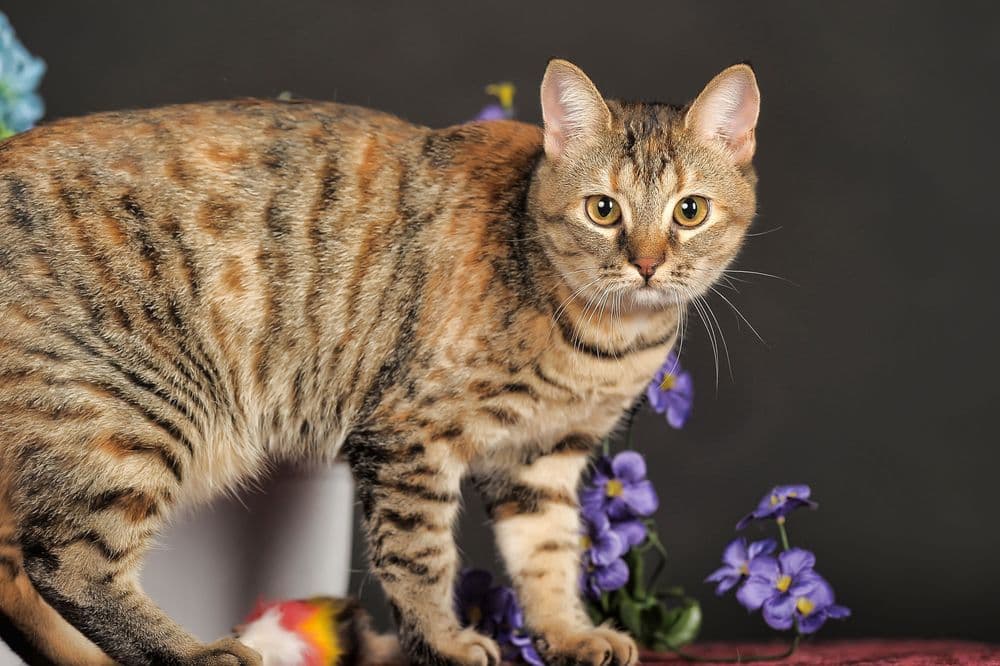
Cat Breed Identification Guide by Ears, Eyes, Coat and Size
Spotting a cat’s breed is often a visual puzzle. By focusing on ears, eyes, coat, and size, you can quickly narrow down the possibilities and make smarter guesses.
Using Ears to Identify Cat Breeds
Ears are one of the quickest ways to sort cat breeds.
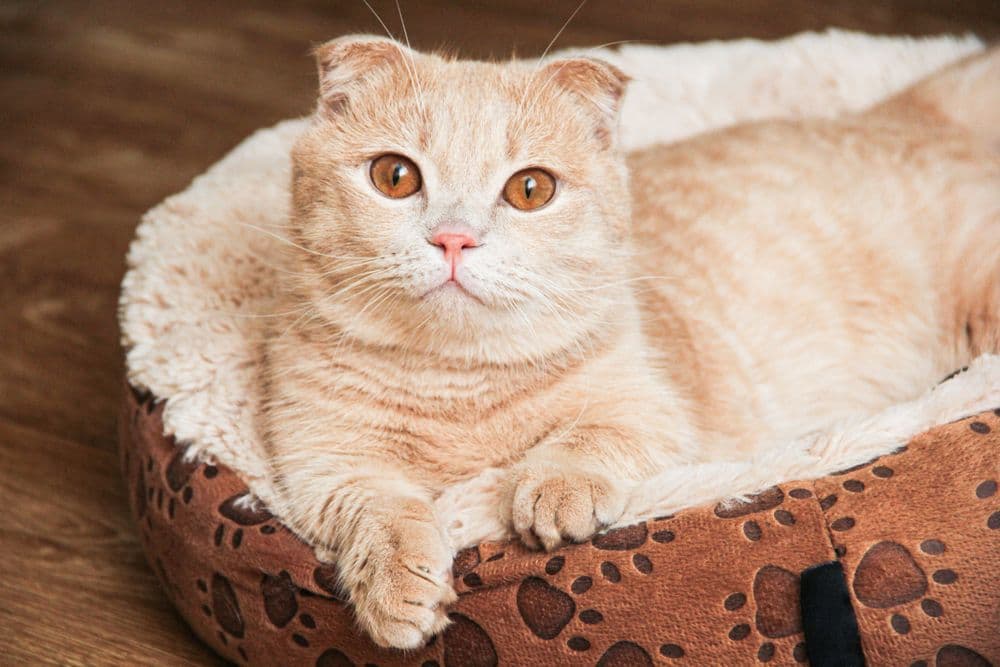
- Cats with tightly folded forward ears are likely Scottish Folds or related mixes.
- Cats with large, high-set pointed ears and a wedge-shaped head often belong to Siamese or Oriental-type breeds.
- Cats with huge, wide-based ears and a wild look may be Abyssinians or Savannah cats.
- Cats with curled-back ear tips are typically American Curls.
- Cats with tufted “lynx tips” and large ears can be Maine Coons or Norwegian Forest Cats.
- Cats with medium ears and rounded tips are common among British Shorthairs and domestic shorthair mixes.
Reading Eye Shape and Color
Eyes reveal both breed clues and overall expression.
- Cats with almond-shaped, slightly slanted eyes and a long face may be Siamese, Oriental Shorthairs, or Balinese.
- Cats with big, round “owl-like” eyes often resemble British Shorthairs, Scottish Folds, or Persians.
- Cats with vivid blue eyes and color-point coats are frequently Siamese, Ragdolls, or Birmans.
- Cats with odd eyes, one blue and one gold or green, appear in Turkish Vans, Turkish Angoras, and some white domestic cats.
- Cats with golden or copper eyes and a flat face are often Persians or Exotic Shorthairs.
- Cats with intense green eyes and a ticked or silver coat may be Russian Blues, Egyptian Maus, or Chinchilla-type Persians.
Coat Type, Pattern, and Length
The coat offers some of the strongest clues for cat breed identification.
- Cats with long, flowing coats and a broad chest may be Maine Coons, Norwegian Forest Cats, or Ragdolls.
- Cats with very long, dense fur and a flat or snub nose are usually Persians or Himalayan-type cats.
- Cats with semi-long silky coats and color-point markings commonly indicate Ragdolls or Birmans.
- Cats with very short, plush, even coats and a stocky body can resemble British Shorthairs or Russian Blues.
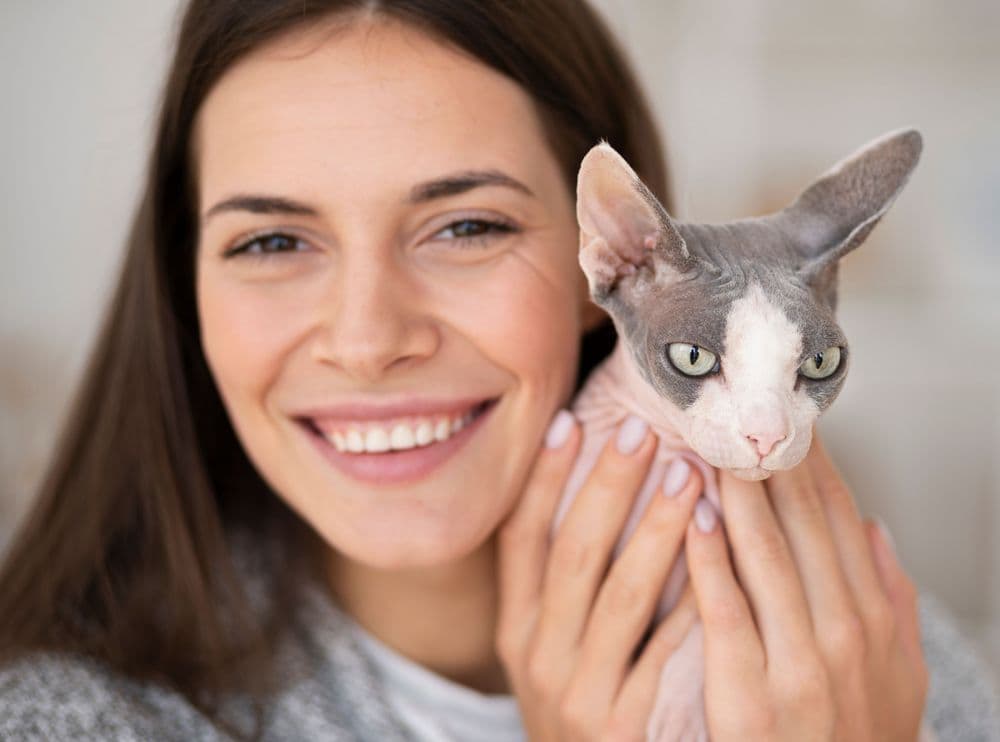
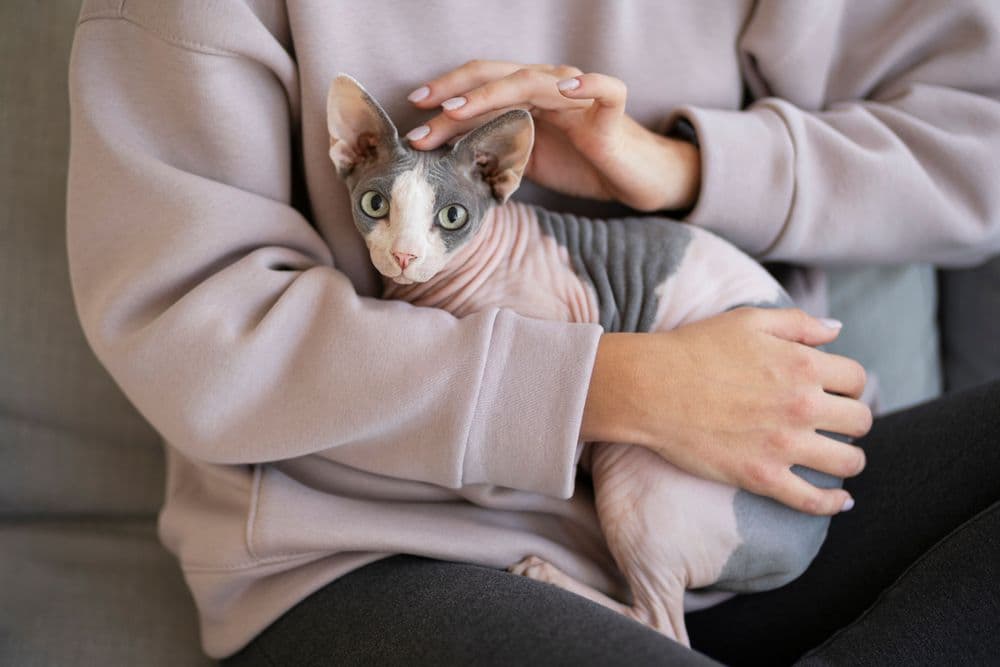
- Cats with nearly hairless skin, large ears, and visible wrinkles are typically Sphynx or related hairless breeds.
- Cats with tight waves or curls in the coat are often Devon Rex, Cornish Rex, or LaPerm cats.
- Cats with ticking, where each hair has multiple bands of color, are frequently Abyssinians, Somalis, or Singapuras.
- Cats with bold rosettes or spots on a golden background may be Bengals or Ocicats.
- Cats with classic color-point patterns and medium length fur often belong to Siamese-derived breeds.
Estimating Breed by Size and Build
Size and body structure help confirm what ears, eyes, and coat suggest.
- Cats with very large, muscular bodies and heavy tails are usually Maine Coons or big mixed-breed cats.
- Cats with medium-large but athletic builds and long legs might be Savannahs, Bengals, or Abyssinians.
- Cats with compact, cobby bodies and thick legs are often Persians, British Shorthairs, or Exotic Shorthairs.
- Cats with very slender, elongated bodies and fine bones are characteristic of Siamese and Oriental-type breeds.
- Cats with small, delicate frames and large eyes may be Singapuras or petite mixed-breed cats.
- Cats with semi-foreign builds, neither stocky nor ultra-slim, are common among domestic shorthairs and many unregistered cats.
Putting It All Together
No single feature proves a breed, but combinations are powerful.
- A large cat with tufted ears, long shaggy fur, and a bushy tail may point toward a Maine Coon.
- A blue-eyed cat with color points, semi-long fur, and a relaxed personality may be a Ragdoll or Birman type.
- A sleek, spotted, medium-large cat with a wild look may be a Bengal or Savannah mix.
- A round-faced cat with short nose, long dense coat, and copper eyes strongly suggests a Persian-type cat.
Conclusion
Accurate cat breed identification comes from reading multiple traits together, not from one feature alone. Compare your cat’s ears, eyes, coat, and body size as a set, then match that profile to known breed standards. When in doubt, call your cat a mixed breed with traits “similar to” a known type. For precise answers, consider consulting a veterinarian, breed club, or genetic testing alongside this visual guide.
 X
X Facebook
 Telegram
 Instagram
 WhatsApp