
Smart and Low Maintenance Cat Breeds: Easy but Engaging Pets
Choosing a cat that is both smart and low maintenance can give you the best of both worlds: an engaging companion without an exhausting care routine. The right breed stays mentally sharp while fitting easily into a busy lifestyle.
What Makes a Cat Smart and Low Maintenance?
Smart, low maintenance cats share a few defining traits that make everyday life easier and more rewarding.
- They learn household routines quickly and adapt well to predictable schedules.
- They pick up basic training such as using scratching posts and coming when called.
- They are playful and curious without needing constant human entertainment.
- They groom themselves efficiently and usually keep their coats in good condition.
- They have moderate energy levels that suit apartments and smaller homes.
- They tolerate brief periods alone without becoming destructive or distressed.
When these traits come together, you get a cat that is mentally stimulating, but not demanding around the clock.
Smart and Low Maintenance Cat Breeds to Consider
British Shorthair
The British Shorthair is often described as calm, observant, and quietly intelligent.
- This breed usually has a dense, short coat that needs only weekly brushing.
- British Shorthairs tend to enjoy being near you without constantly climbing on you.
- They learn routines quickly and typically adapt well to indoor living.
- Their moderate play drive keeps them active without constant supervision.
Russian Blue
Russian Blues are known for their sharp minds and reserved, loyal nature.
- Their short, plush coat sheds moderately and is easy to maintain with light grooming.
- Russian Blues often form strong bonds and respond well to gentle training and puzzles.
- They usually appreciate a predictable environment and a few favorite toys.
- Many are content to nap while you work, then engage in focused play sessions later.
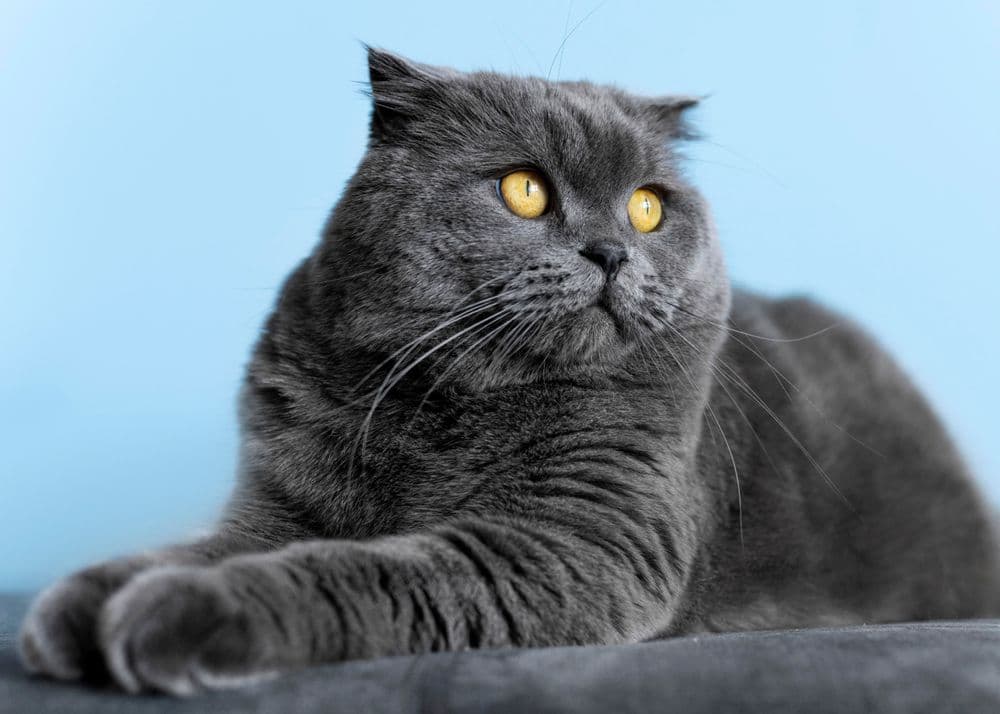
Scottish Fold
Scottish Folds are often quietly playful and highly observant.
- Their coat can be short or long, but the short-haired lines are especially low maintenance.
- They tend to enjoy interactive toys but rarely demand constant activity.
- Many Scottish Folds adapt well to apartment life and a stable daily routine.
- Regular vet checks are important because some lines can be prone to joint issues.
Burmese
The Burmese is affectionate and bright without being overly intense.
- Their short, fine coat sheds lightly and only needs quick weekly grooming.
- Burmese cats usually enjoy learning simple tricks and playing fetch-like games.
- They often follow their humans from room to room without becoming frantic if left alone.
- They thrive when they have climbing spaces and puzzle feeders to explore.
Domestic Shorthair (Mixed-Breed)
Well-chosen domestic shorthairs can be some of the smartest and easiest cats to live with.
- Their short, varied coats are usually low maintenance and simple to brush.
- Many shelter cats show quick problem-solving and strong social awareness.
- You can choose an adult cat whose temperament and energy level are already clear.
- Working with a shelter or rescue helps you match a cat’s personality to your lifestyle.
Keeping a Smart, Low Maintenance Cat Engaged
Even low maintenance, intelligent cats need the right kind of stimulation to stay happy.
- Offer short daily play sessions that focus on chasing, pouncing, or climbing.
- Rotate simple toys like feather wands, crinkle balls, and soft mice to keep interest high.
- Use puzzle feeders so your cat can “hunt” for part of its daily food.
- Provide vertical spaces such as shelves or trees to satisfy natural curiosity.
- Teach small tricks using treats, such as sitting, targeting a hand, or jumping onto a perch.
- Maintain a predictable routine so your cat can anticipate meals, play, and quiet time.
Matching the Right Cat to Your Lifestyle
Choosing a smart, low maintenance cat is about fit, not just breed labels.
- Decide how many minutes per day you can realistically spend on play and grooming.
- Be honest about noise tolerance, travel frequency, and the presence of children or other pets.
- Meet individual cats and observe who is curious but not hyper and social but not clingy.
- Ask breeders or shelters for cats noted as easygoing, quick learners, and good apartment companions.
- Prioritize adult cats when possible so energy level and behavior are easier to assess.
Conclusion
Smart, low maintenance cat breeds provide an ideal mix of independence and interaction for busy households. By focusing on temperament, grooming needs, and energy level, you can find a cat that fits your routine without sacrificing companionship. Meet individual cats, ask targeted questions, and plan simple enrichment so your new feline stays engaged. With the right match, you gain a thoughtful, entertaining pet that is easy to care for day after day.
 X
X Facebook
 Telegram
 Instagram
 WhatsApp