
Rare Cat Breeds You Should Know and How to Recognize Them
Most people can spot a Siamese or Persian at a glance, but some cats are so rare that even animal lovers struggle to identify them. Learning how to recognize rare cat breeds not only satisfies curiosity, it also helps you understand their special care needs and origins.
How to Recognize Rare Cat Breeds at a Glance
When identifying rare cats, focus on a few key features:
- Look at body shape and size, noticing whether the cat is long and slender, muscular and cobby, or compact and short-tailed.
- Study the head and face, paying attention to ear size, muzzle shape, eye placement, and any unusual traits like folded ears.
- Examine the coat type, checking for hair length, curl, texture, pattern, and color restrictions unique to the breed.
- Observe the tail, noting if it is bobbed, kinked, curled, or unusually fluffy compared with the body.
- Consider overall impression, combining several standout traits rather than relying on a single feature like color alone.
Rare Cat Breeds You Should Know and How to Spot Them
Lykoi (Werewolf Cat)
- The Lykoi has a sparse “half-dressed” coat with bald patches around the eyes, nose, and muzzle that create a werewolf-like look.
- Its coat is usually roan, meaning a mix of white and black hairs that gives a patchy, salt-and-pepper appearance.
- The Lykoi’s face is wedge-shaped with large, alert ears and intense yellow or gold eyes that add to its wild expression.
Kurilian Bobtail
- The Kurilian Bobtail has a distinctive short, pom-pom tail that looks like a rounded plume rather than a straight stump.
- Its body is medium to large, muscular, and powerful, giving a sturdy, athletic outline.
- The coat can be short or semi-long but always appears dense and weatherproof, often with bold tabby or bi-color patterns.
Sokoke
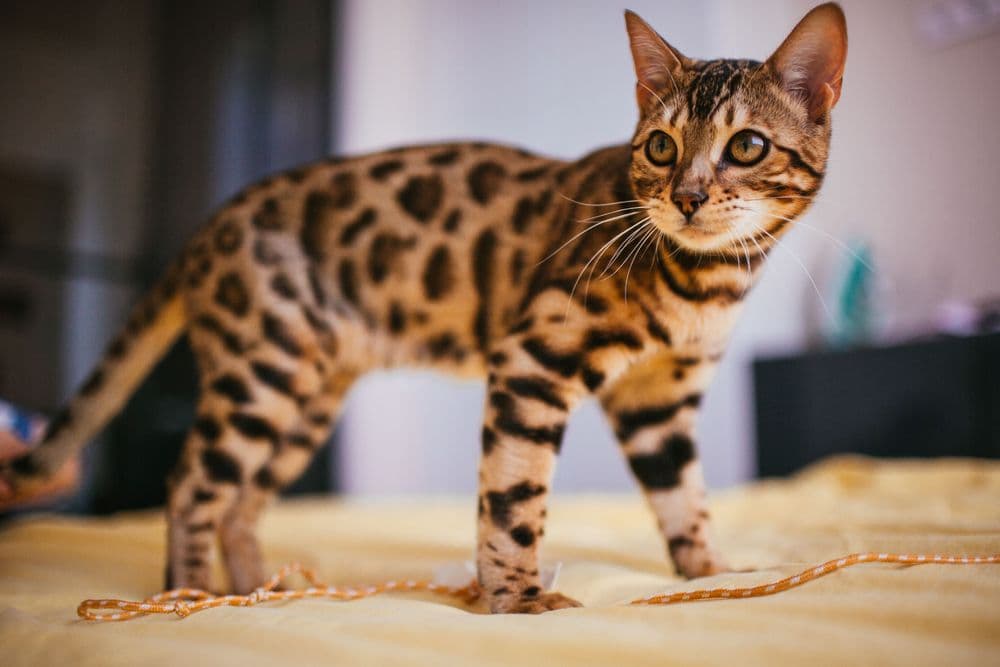
- The Sokoke is slim and elegant with long legs and a slightly elongated body that gives a graceful, almost wildcat stance.
- Its coat is always short, close-lying, and patterned with a unique “African tabby” marbled pattern that looks like swirling wood grain.
- The head is small with large, almond-shaped eyes (often green or amber) and moderately large ears that emphasize its alert expression.
Selkirk Rex
- The Selkirk Rex is easy to recognize by its plush, curly coat that looks and feels like teddy bear fur.
- Both longhair and shorthair Selkirk cats have visible waves or ringlets, including curly whiskers that gently twist.
- The body is chunky and heavy-boned with a round head, full cheeks, and big, round eyes that create a soft, owl-like face.
American Curl
- The American Curl’s defining feature is its backward-curled ears that form a graceful arc away from the face.
- The ears are firm at the base but curve at the tips and are always rimmed with fur, making them look sculpted.
- The breed can be longhair or shorthair and comes in many colors, but the curled ears are non-negotiable for identification.
Egyptian Mau
- The Egyptian Mau is one of the few naturally spotted cat breeds, with clear, random spots on a light background.
- Its body is medium-sized, lithe, and muscular, and the hind legs are slightly longer, giving a tiptoe stance.
- The breed usually has a distinctive “M” on the forehead and a worried, slightly frowning expression with large, green eyes.
Conclusion
Paying attention to body shape, coat texture, patterns, and standout features like curled ears or bobbed tails makes recognizing rare cat breeds much easier. Use these visual cues as a starting guide and confirm with a breeder or vet if you suspect you have a rare cat. The more you learn about unusual breeds, the better you can appreciate and care for them responsibly.
 X
X Facebook
 Telegram
 Instagram
 WhatsApp